Something went wrong on this page. Reload
Reconnecting…

The connection to our server was lost. Reload the page to carry on — nothing you typed has been sent.

Reload
Design · Programming · Supervision

Your whole home, from a fingertip. Or a sentence.

We design the intelligence of your building — lighting, blinds, climate, energy, alarm, cameras, access — and unify it in one app you can also simply talk to. Professional engineering at a fraction of what the big firms charge.

Free and with no obligation — an engineer replies within 48 working hours.
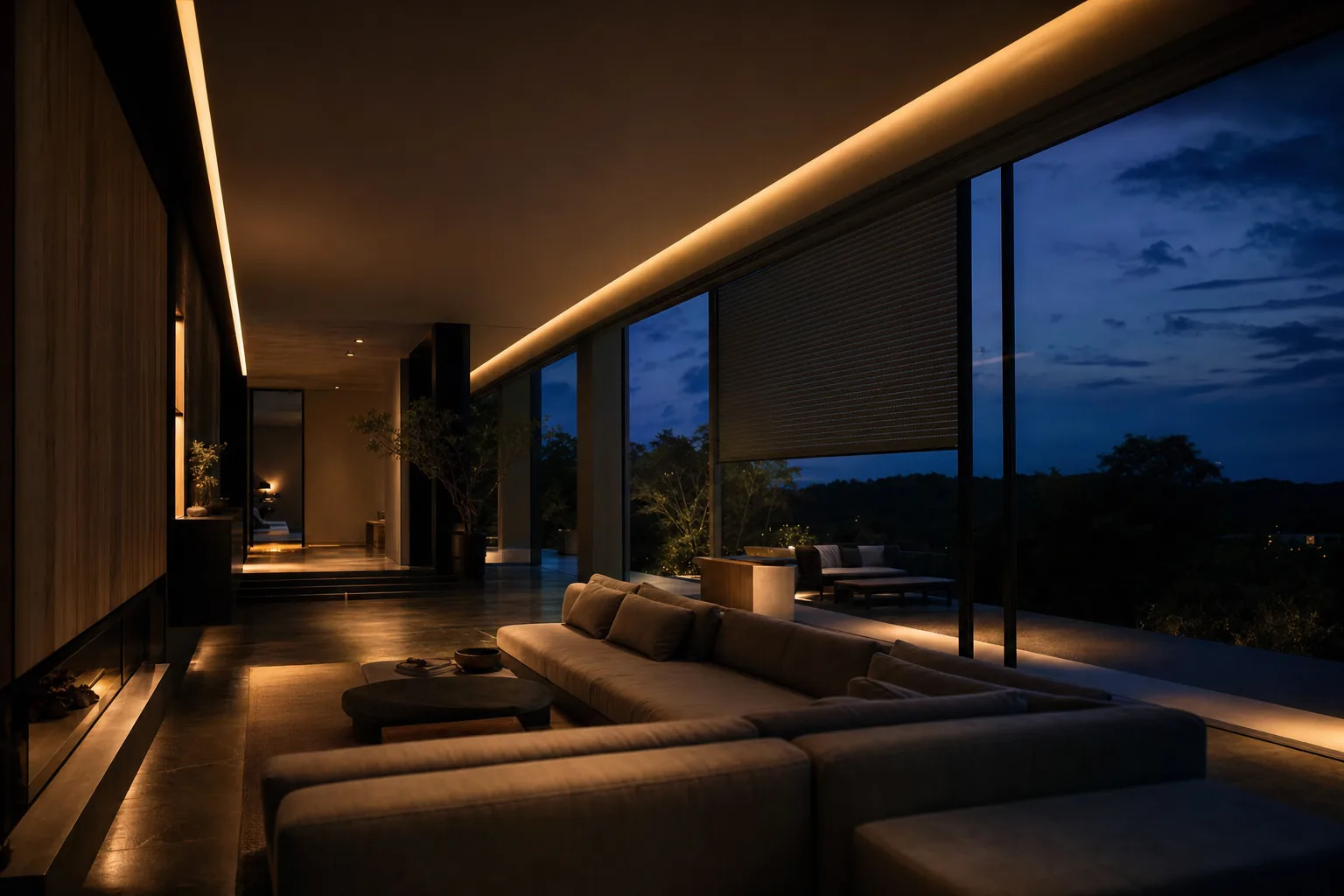
"Good night" — the house closes down
Away · everything off · alarm on
We design on the technologies that last
  • KNX
  • Zigbee
  • Matter
  • Thread
  • Modbus
  • DALI

One installation, one app. Which technology goes into your building is our decision, not a question we put to you.

What we do

Two ways in. One result.

Whether the walls are still open or the house has been lived in for twenty years, the outcome is the same: a building that does what you want, from your phone or from your voice.

New buildings

The full design of your installation

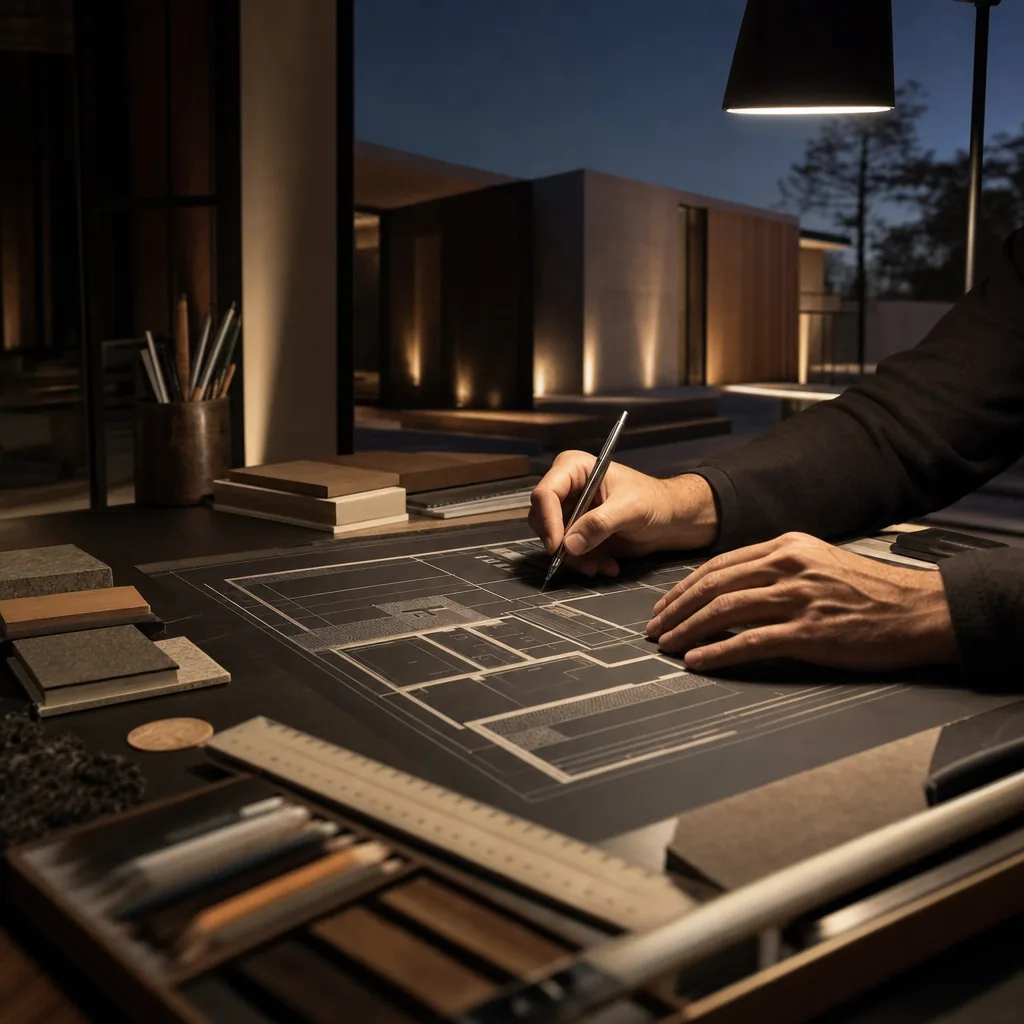
Before a single cable is pulled, we design what the building will be able to do — for today and for the next twenty years. Then we supervise your electricians while they install it.

  • Complete design: topology, circuits, devices, functions
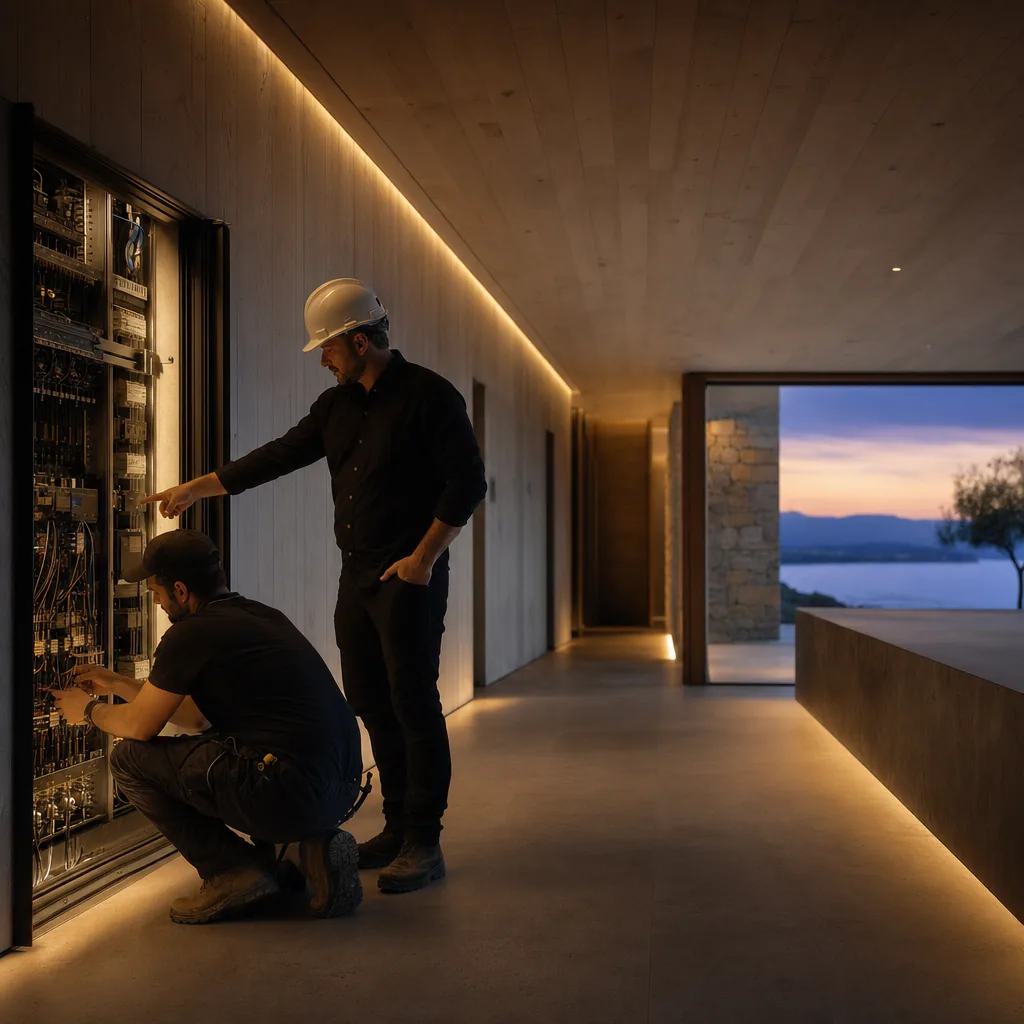
  • We supervise the installation, alongside the promoter's own electricians
  • We charge nothing for the physical work
  • Full programming and commissioning — the part that decides everything
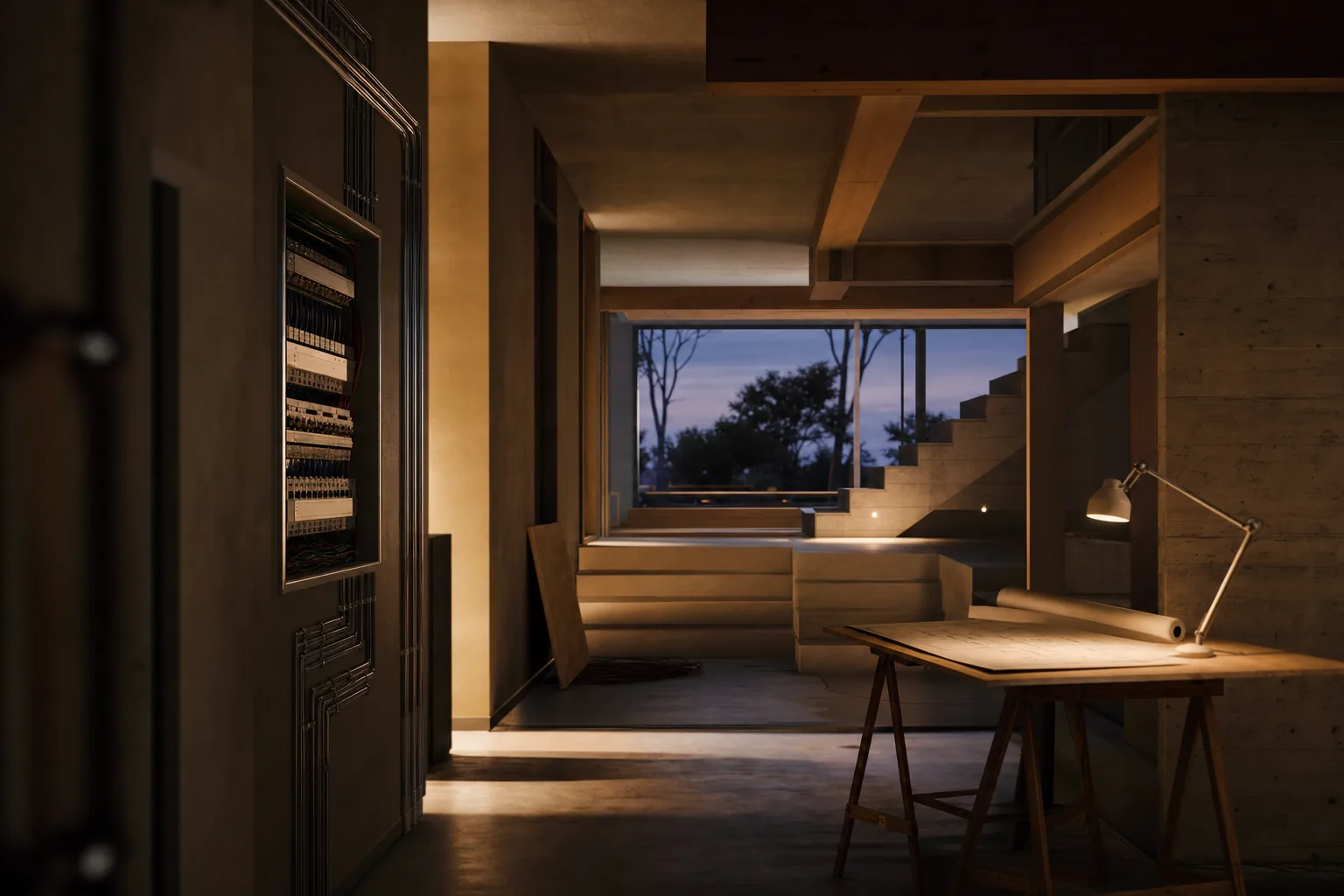
New building? Start here
Existing homes

Automation without touching your walls

Your house is finished, furnished and lived in. It does not need rewiring — it needs a system designed properly on top of what is already there.

  • No new wiring, no dust, no works
  • Wireless technologies chosen device by device, not by catalogue
  • Room by room, at your pace and your budget
  • The same single app, the same voice control
  • Even the communal garage door, with the remote you already carry
Existing home? Start here
The difference

Almost everyone installing home automation is an electrician. We are software engineers.

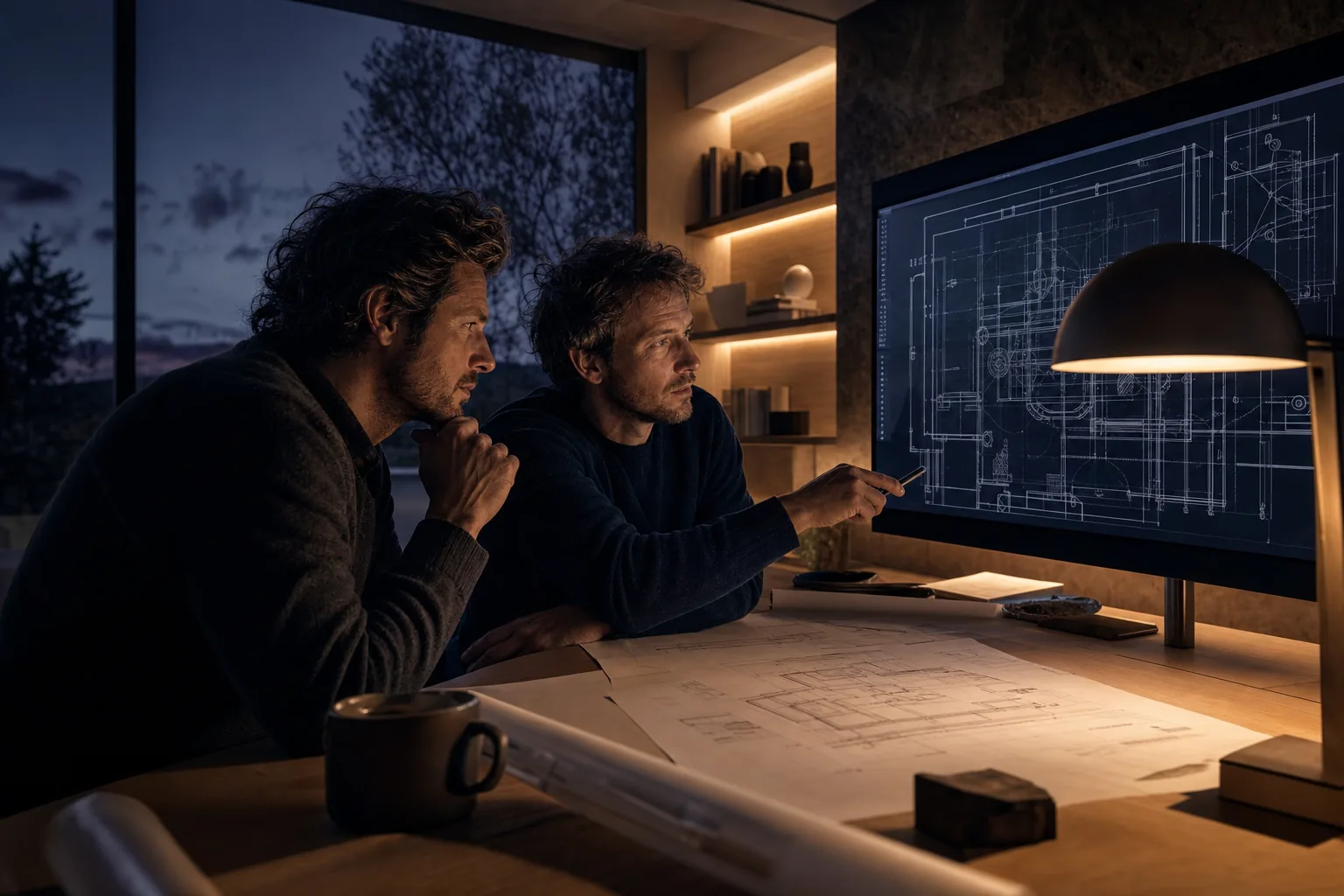
That is not a detail. In an installation of this kind, the physical part is the simple part: cables, actuators, a cabinet. What decides whether the building is intelligent or merely wired is the design and the programming — and that is a software discipline.

An installer with a short course in home automation can make a light come on from a button. Making the house understand that you are away, that the sun is on the west facade, that the price of electricity has dropped and that the alarm should behave differently tonight — that is programming. It is what we have done all our working lives.

A badly designed installation does not fail on day one. It fails in year five, when you want something it can no longer do.

Everything a home automation system will ever be able to do is decided at the design stage. Wiring, topology and the choice of devices set a ceiling that no amount of later effort can raise — short of opening the walls again. This is why the design has to be done by someone who genuinely understands these installations in depth, and why we take that stage as seriously as we do.

The usual installation
  • ✕Designed from a catalogue and a wiring habit
  • ✕Basic functions: on, off, up, down
  • ✕One app per manufacturer, and a remote for the rest
  • ✕Any change means calling the installer back
  • ✕The ceiling is set on day one, and nobody says so
A TodoDomo installation
  • ✓Designed as a system, with the whole building in view
  • ✓Real logic: scenes, conditions, schedules, presence, weather, energy
  • ✓One app for everything, plus voice and AI
  • ✓Built to be extended — because software is our profession
  • ✓Room to grow for the next twenty years, by design
0
charged for physical installation work
0
hours to a personal reply, at most
0
app for the entire building
0
years the design has to hold up for
What your home will do

Everything, in one place

One app on your phone. One sentence spoken out loud. The building does the rest.

Light
Circuits, dimming, scenes, automatic by presence and daylight
Climate
Heating, cooling, hot water and ventilation, zone by zone
Security
Alarm, cameras, access, intercom and instant alerts
Energy
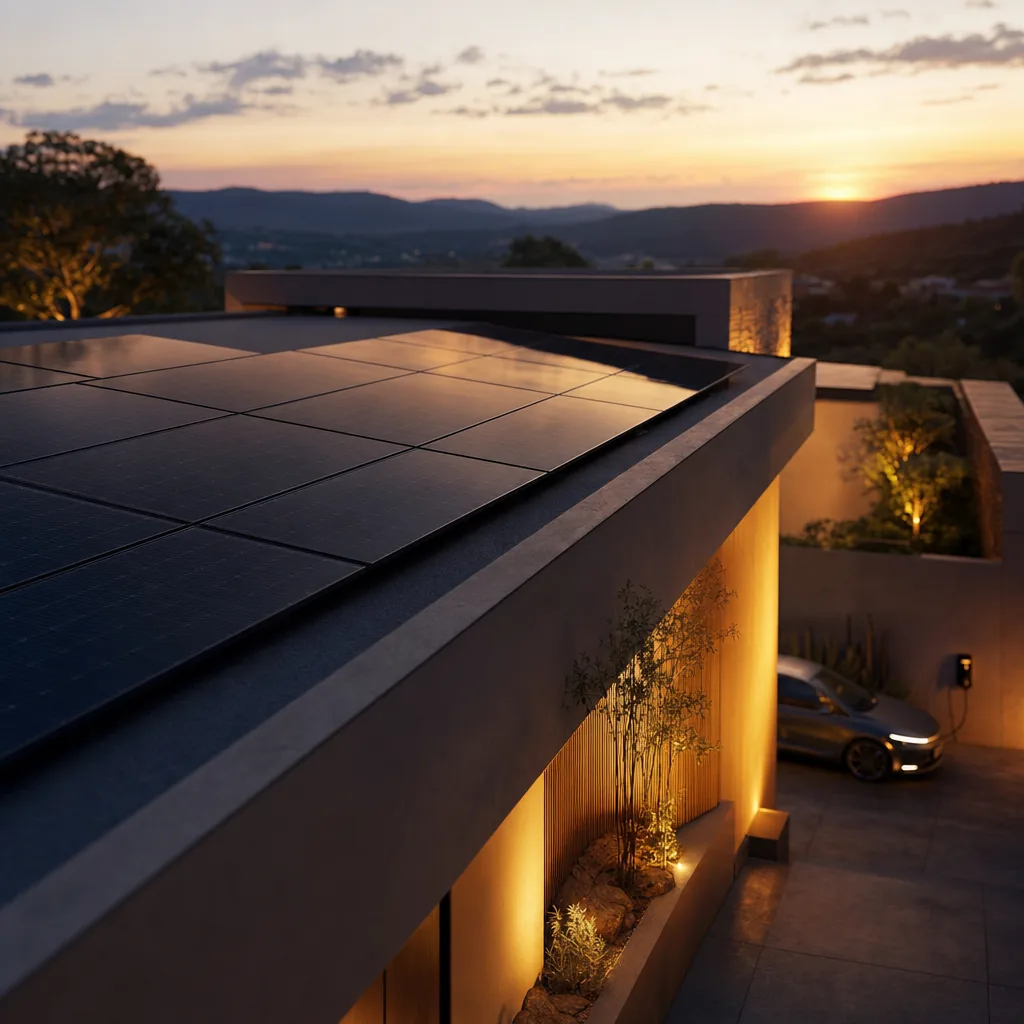
Consumption, solar, batteries and EV charging, managed together

And the rest of the house:

Blinds and shuttersCurtainsIrrigationPoolMultiroom audioTV and home cinemaPresence detectionWater-leak detectionWeather stationGarage and gatesScenes and routinesRemote access
Voice and AI

Talk to your house the way you would talk to a person

You should not have to learn a command list. You say what you want, an assistant works out what that means for this building, and the house does it — lights, blinds, temperature, music, alarm, all at once if that is what the moment needs.

  • "It is too bright in here" — the right lights dim, the blind comes down
  • "We are going to bed" — the house shuts down and arms itself
  • "Is the garage closed?" — it answers, and closes it if not
Keyless entry

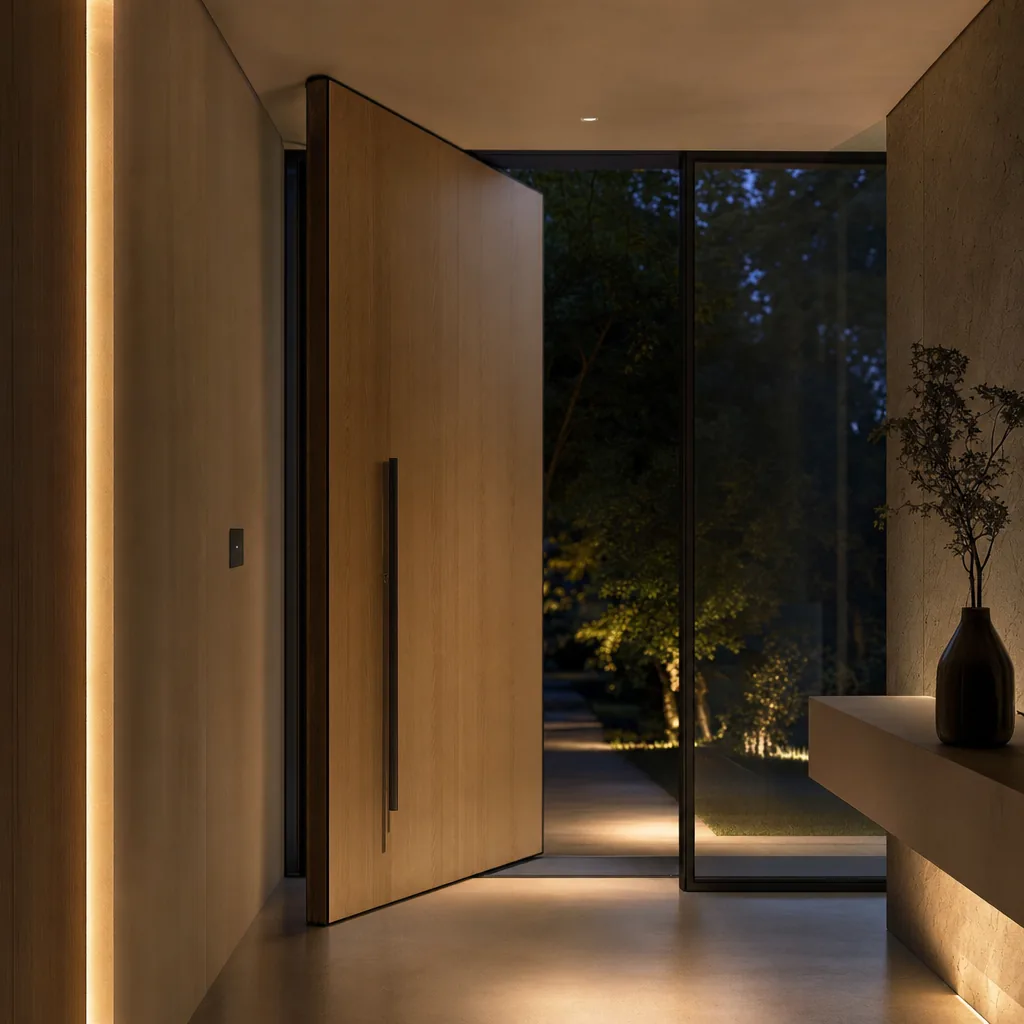
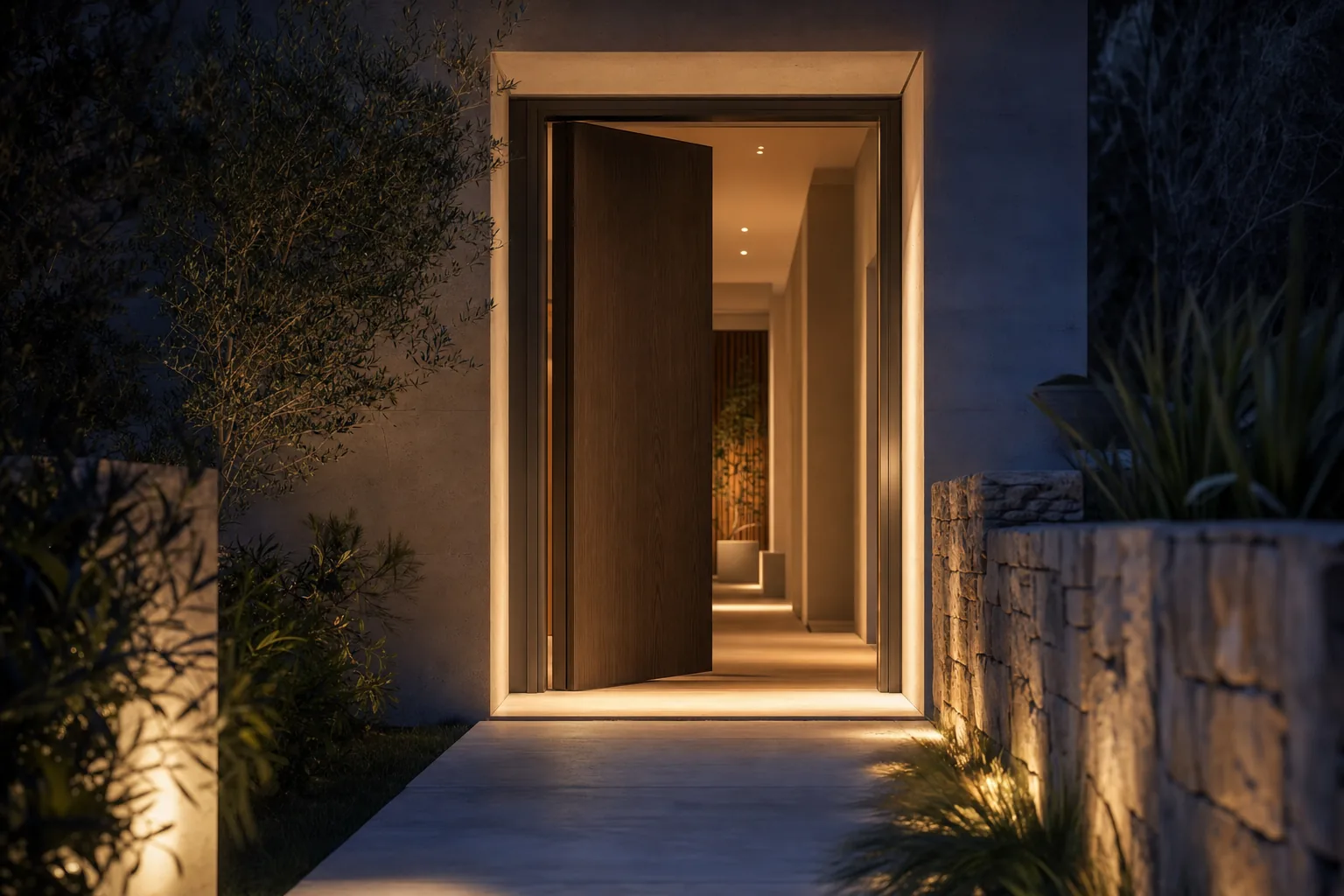
Nobody unlocks a car with a key any more. The front door is the last one left.

You stopped carrying a car key twenty years ago and you would not go back. The car simply knows you are there. Yet the most important door you own still needs a piece of metal in a pocket — and still locks you out the one evening you leave it on the kitchen table.

And we do not touch the lock. Not the cylinder, not the lock case, not the door.

Never locked out again

Keys shut inside the house stop being an emergency. No locksmith at eleven at night, no drilled cylinder, no damaged door, no bill for any of it. Your phone opens it — and so does a one-off code you can give someone over the telephone from anywhere.

The whole family stops carrying keys

Including the children. A child cannot lose a key they never carry, cannot leave one where it should not be, and cannot be left standing outside because they forgot it. Everyone gets their own access, and you can withdraw any of it in seconds.

More secure, not less

A key can be copied, lent, lost or picked, and you never know when it happens. Access you grant can be limited to a person, revoked the moment a cleaner or a builder finishes, and it tells you who came in and when.

The mechanism goes behind the existing door furniture and drives the lock you already have, exactly as your own hand does. Your key keeps working — the door simply stops needing it. Nothing is drilled, nothing is replaced, and nothing about the door changes to look at.

Even the communal garage

We can open the garage of a shared building — without touching its installation

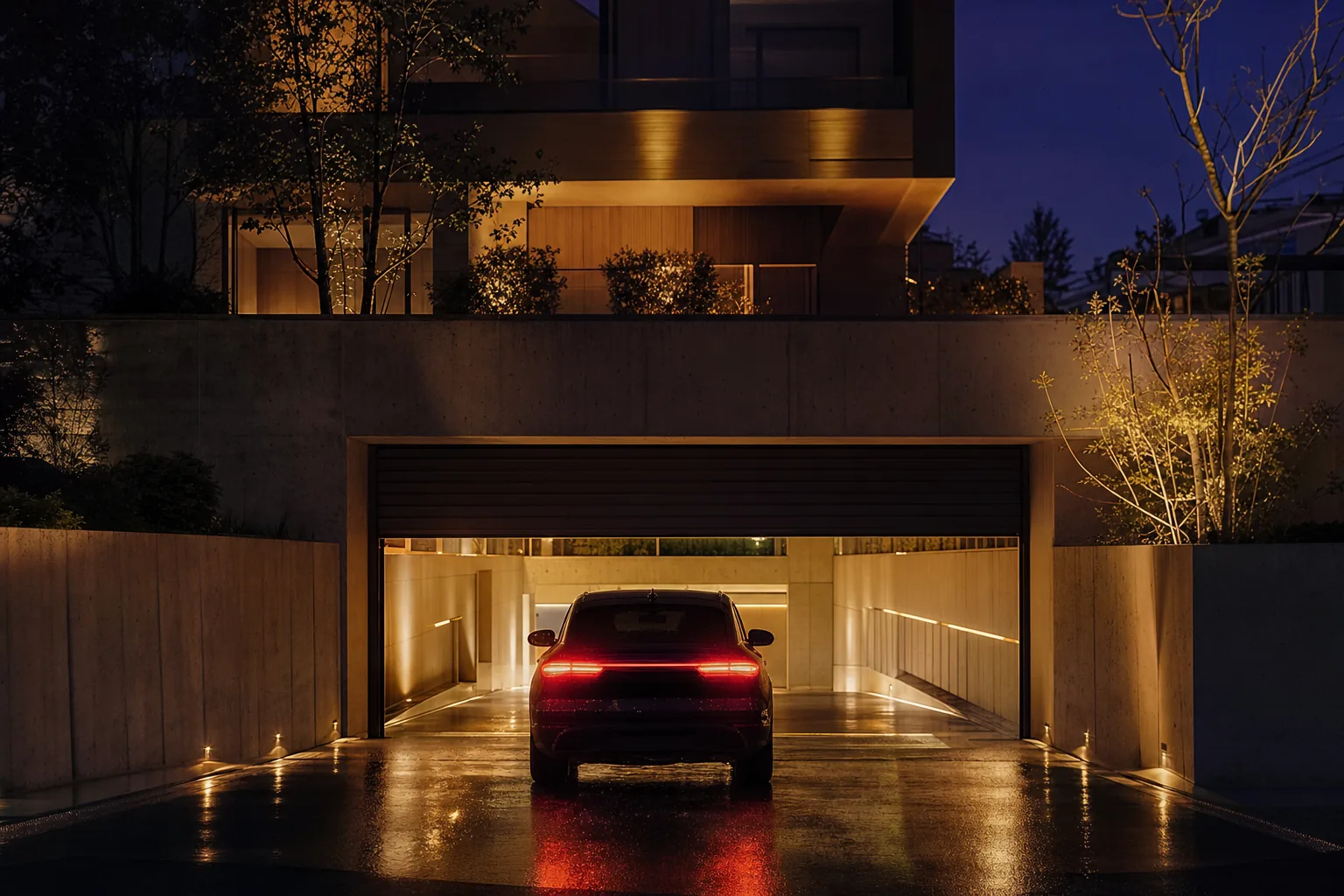
This is the one everybody assumes is impossible. The garage door of a block of flats belongs to the community: you cannot rewire it, you will not get a hundred neighbours to agree, and no installer wants to touch it. We do not need to touch it.

Your own remote, pressed for you

We keep the remote control you already carry and add a small mechanism that presses its button the moment you tap your phone. The community's motor, receiver and wiring are never altered — nothing in the shared installation changes, so nobody's permission is required.

Or it opens as you arrive

The system recognises your car coming home and asks whether to open. One confirmation from you and the door lifts — so it can never open by itself because a neighbour, a visitor or a passing phone happened to be nearby.

The same approach works for gates, barriers and communal entrance doors. If it has a remote you already carry, we can put it in your phone.

No catalogue

If you can describe it, we can program it.

An installer fits the functions a manufacturer thought of. We write software, so the house is not limited to a product sheet — it is limited by what you can imagine wanting. Here are six real examples; none of them is a feature you buy, all of them are things we programmed because somebody asked.

When the house empties

The last person leaves and the mains water valve closes behind them. A perished washing-machine hose can no longer flood the flat below while you are at work — and the water is back on before you reach the door coming home.

When water appears where it should not

A sensor under the sink shuts the valve and tells you, in the minute it starts rather than the evening you find the ceiling below already ruined.

When electricity is cheap

The tank heats and the washing machine starts while your panels are producing or the tariff is down — not at the moment somebody happened to press a button.

When a window opens

Heating or cooling stops in that room alone and resumes when it closes. Nobody has to remember, and nobody pays to warm the street.

When the house is empty for a week

Lights, blinds and sound keep the rhythm of a house that is lived in, at hours that shift each day — because a blind that comes down at exactly 20:00 every evening advertises that nobody is home.

When it is the children's bedtime

Their room will not go above a soft warm level, the corridor lights the way at five per cent, and you are told if the front door opens after midnight.

These are examples, not a menu. Anything the building can sense and anything it can switch, we can join together — and if you can describe what you want to happen, it can almost certainly be written. The limit is your imagination, or ours. That is the whole difference between fitting devices and writing software.

How we work

Four steps, and we are with you for all of them

You never have to translate between an architect, an electrician and a technology supplier. That is our job.

01

We design

We study the building, your habits and your plans, and we design the installation in full: what goes where, what it will be able to do, and what it must never stop you doing later.

02

We supervise

Your electricians install it. We work alongside them and the promoter, checking the work as it happens — which is why we charge nothing for the physical work.

03

We program

The stage the rest of the market treats as an afterthought. Every function, scene, condition and automation, written and tested properly.

04

You live in it

One app, voice control, and a system that keeps growing with you. We stay reachable — a house evolves, and so should its logic.

For promoters and developers

We work with your electricians, not instead of them

You keep your teams, your suppliers and your schedule. We add the one thing that is genuinely hard to buy: a design that makes the finished homes worth more, and the programming that proves it at the viewing.

  • One design, repeated across every unit of the development
  • A demonstrable selling point in the show home
  • No labour cost from us — we bill the design and the programming
  • We speak to your architect and your electrician directly
Talk to us about a development

Tell us about your building

A few questions about your floors and rooms, and what you would like to be able to do. It takes about three minutes, it is free, and it commits you to nothing.

No technical knowledge needed. We never ask you to choose a technology — that is our decision to make.