Because this is a software problem wearing an electrical costume
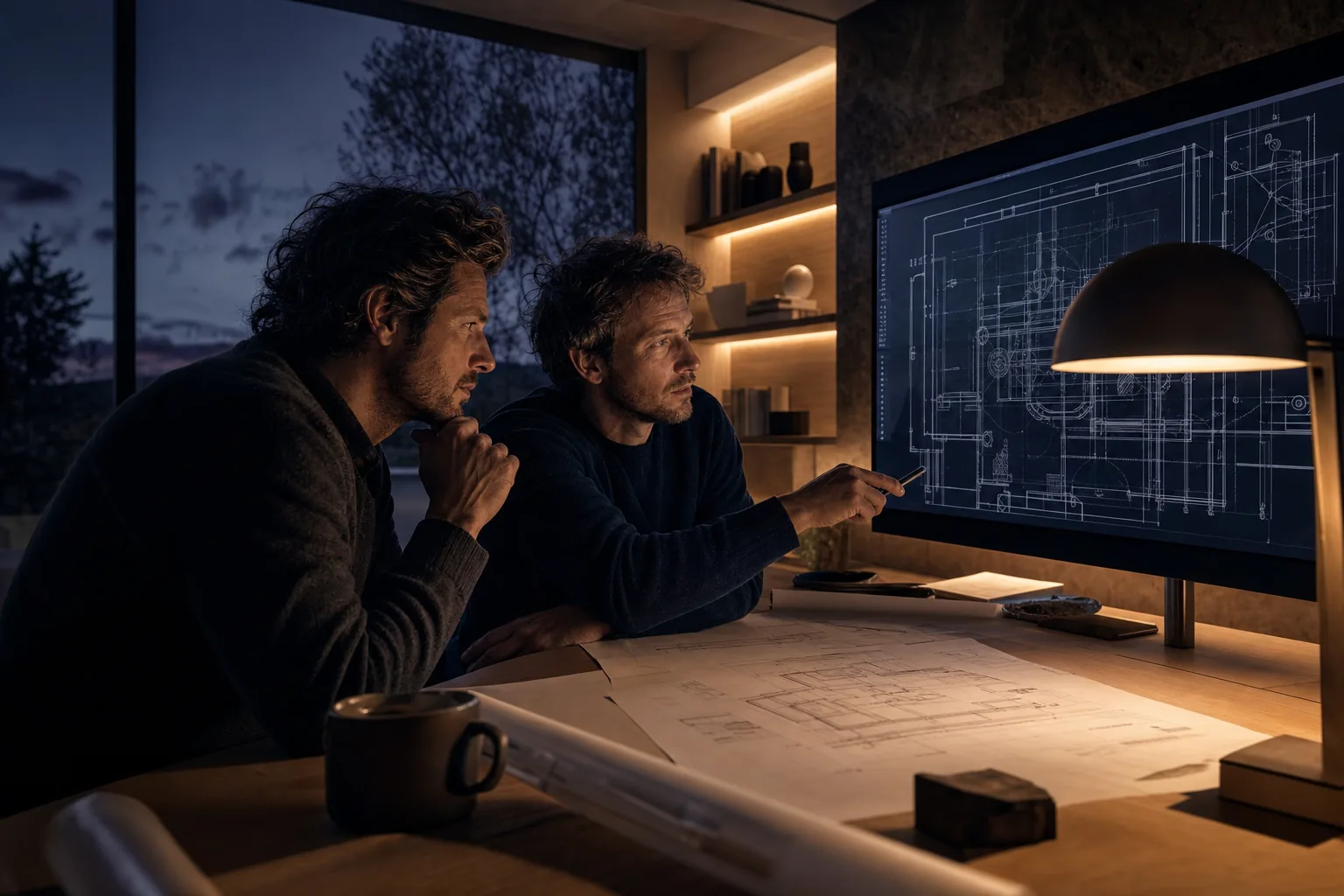
Almost everyone installing home automation is an electrician. We are software engineers.
That is not a detail. In an installation of this kind, the physical part is the simple part: cables, actuators, a cabinet. What decides whether the building is intelligent or merely wired is the design and the programming — and that is a software discipline.
An installer with a short course in home automation can make a light come on from a button. Making the house understand that you are away, that the sun is on the west facade, that the price of electricity has dropped and that the alarm should behave differently tonight — that is programming. It is what we have done all our working lives.
A badly designed installation does not fail on day one. It fails in year five, when you want something it can no longer do.
Everything a home automation system will ever be able to do is decided at the design stage. Wiring, topology and the choice of devices set a ceiling that no amount of later effort can raise — short of opening the walls again. This is why the design has to be done by someone who genuinely understands these installations in depth, and why we take that stage as seriously as we do.
- ✕Designed from a catalogue and a wiring habit
- ✕Basic functions: on, off, up, down
- ✕One app per manufacturer, and a remote for the rest
- ✕Any change means calling the installer back
- ✕The ceiling is set on day one, and nobody says so
- ✓Designed as a system, with the whole building in view
- ✓Real logic: scenes, conditions, schedules, presence, weather, energy
- ✓One app for everything, plus voice and AI
- ✓Built to be extended — because software is our profession
- ✓Room to grow for the next twenty years, by design
Who we are
Computer engineers and software developers. We have spent our careers building systems, not pulling cable — and we came to home automation from the side that actually decides the outcome.
Why that matters here
The market is served almost entirely by electricians who took a short course. They are excellent at the physical installation and, with respect, that is where their training ends. The design, the logic, the integration between systems, the maintainability of what has been programmed — all of it is our daily profession and none of it is theirs.
What you actually get from it
Installations that use everything the technology can do rather than the fraction most installers know how to reach. Systems that can be changed later without being rebuilt. And an integration between lighting, climate, energy, security and audiovisual that a per-device approach simply cannot produce.
And it costs less
We are a small engineering team. No showroom, no sales force, no chain of intermediaries. You pay for design and programming, your electricians are paid for the installation, and nobody in the middle takes a margin for making phone calls.
Big-firm engineering, without the big-firm invoice
We are a small team of engineers with no showroom to pay for and no sales force to feed. You are paying for the design and the programming — the two things that decide what your home can do — and nothing else.
See what that would mean for your buildingTell us about your building
A few questions about your floors and rooms, and what you would like to be able to do. It takes about three minutes, it is free, and it commits you to nothing.
No technical knowledge needed. We never ask you to choose a technology — that is our decision to make.